Into the unknown · September 1950
The secret in San Francisco’s fog
In 1950, the military released bacteria off San Francisco without warning residents. A later hospital outbreak raised a question the surviving evidence could not settle.
In this story
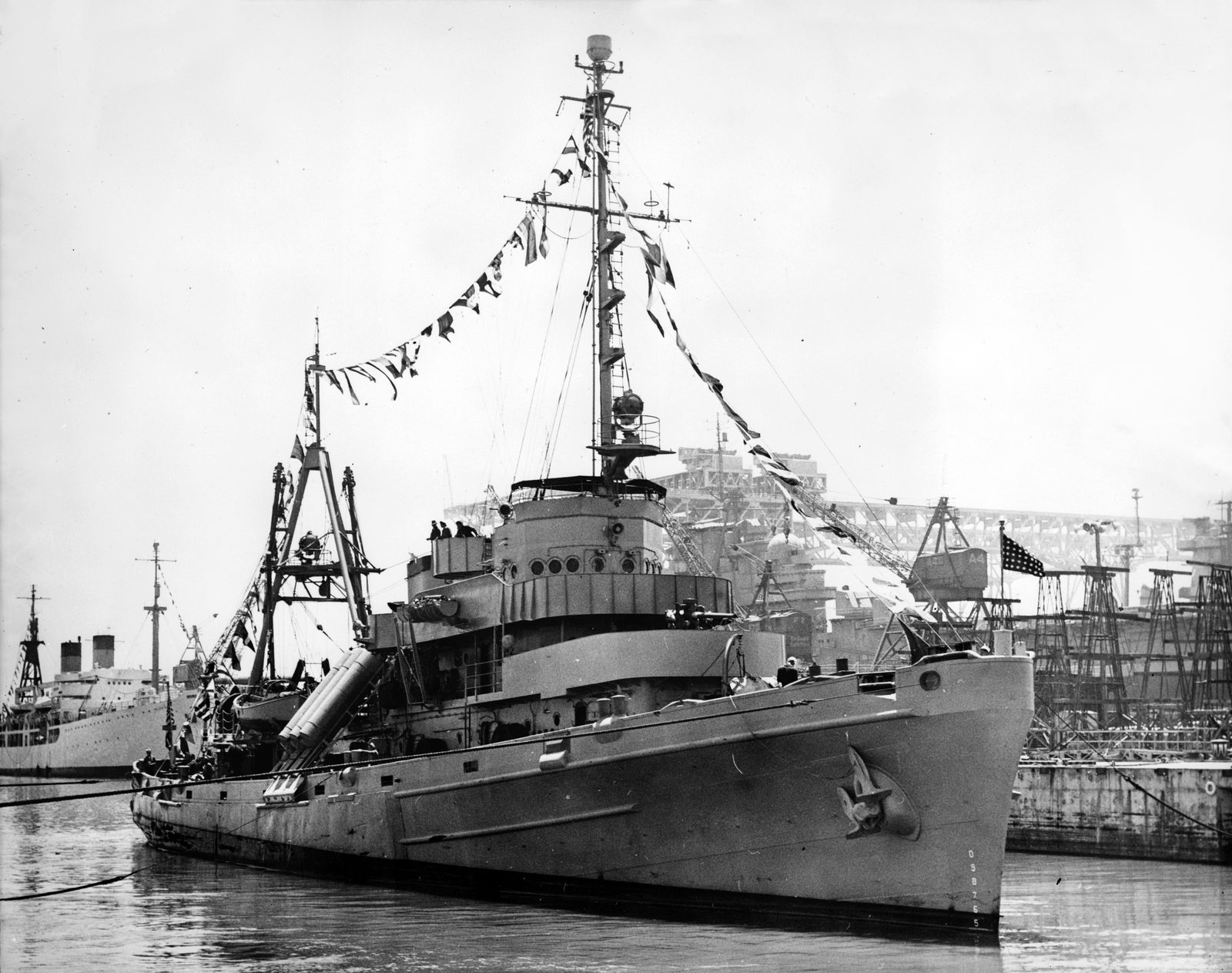
In September 1950, a Navy vessel released bacteria off San Francisco and let the wind carry them inland. The military wanted to measure how a biological agent might spread through a city. Residents were not told they were inside the experiment.
The organisms were Serratia marcescens and Bacillus globigii, used as substitutes for more dangerous agents. The program called them harmless. A later hospital infection cluster made that description harder to accept, although the evidence did not establish that the sprayed strain caused those infections. The experiment is documented. Its precise human cost remains unresolved.
A pigment standing in for a weapon
After 1942 the United States had a biological-weapons program. By 1950 it also had a problem of evidence. You cannot test how a city breathes by spraying the thing you might actually want to use in a war. You spray something you are willing to call safe, and you infer. Serratia marcescens had a reputation, in bacteriology labs, as the sort of organism that grew where it was put and did not kill the person who put it there. It also showed up red, which made the maps easy to read. Bacillus globigii was used the same way in other tests, for the same reason: a tracer, not a warhead.
The reputation was convenient. It was also local to healthy lab workers, not to a city of infants, surgical patients, and people already sick enough to be in a hospital. A simulant is a claim about the organism and a claim about the population. The 1950 test only checked one of them.
Eleven cases and a funeral
Stanford University Hospital, then still in the city, recorded a cluster of Serratia infections unlike its ordinary experience of the bacterium. The physicians wrote it up in 1951. Eleven patients. The infections were urinary, and they followed procedures, which is the fact that lets a later reader say the source was the hospital rather than the wind. One of the eleven, Edward J. Nevin, a man in his seventies recovering from prostate surgery, developed a Serratia infection of a heart valve and died. His family, years later, found the coincidence unbearable enough to sue the United States. The suit failed. Courts are bad instruments for a bacterium released into a wind.
The Army’s position, when the test was finally described in public in the 1970s, was that the organisms did not cause disease and that the hospital cluster was unrelated. The timing is awkward for that position and not, by itself, a proof. Serratia infections happen without navies. Hospitals grow organisms their patients did not bring in from the street, and the other hospitals in the city did not report the same spike. A careful essay has to be able to hold two facts without forcing them to confess to each other: a city was sprayed with Serratia, and a man in that city died of Serratia, and the public record still contains competent people who will not sign the sentence that connects them.
What the hearings added
The Church Committee hearings and the Army’s own inspector-general reviews in the 1970s put the San Francisco test into a list. It was not the only time a simulant was released over Americans. Other cities, other years, other organisms, the same logic: the population as a terrain model. The disclosures did not produce a clean count of illnesses, because the program had not been built to record the illnesses of the people downwind. It had been built to record the plates.
That design decision is the part worth keeping. A test that cannot see harm will report that it saw none. When Serratia’s reputation later moved — when physicians described it as an opportunistic pathogen, perfectly capable of killing a postoperative patient — the 1950 paperwork did not update itself. The word harmless stayed in the old reports because the old reports were the record. The families were left with a pigment and a date.
Why the hook is not the essay
On a forum, the spray arrives as a completed crime. The Navy attacked San Francisco and called it fog. The second clause is fair as a description of what residents were allowed to know. The first clause settles a question the hearings left open, and settling it makes the story easier to share than it is to prove.
If you came here from a sentence about bacteria in the fog, stay for the narrower thing the file will support. A government released a living organism over a city, without consent, because a red colony on a plate was the data it wanted. One man died of that organism in a hospital that week. The state declined to call those the same event. The near-miss is not a weapon that almost was. It is a measurement that treated a city as weather, and a death that the measurement was not designed to count.
A story worth passing on?