Strange schemes · 1698–1700
The Darien scheme: Scotland’s ruinous shortcut
Five ships sailed to build a Scottish trading colony in 1698. When the next expedition arrived, the settlement had already been abandoned.
In this story
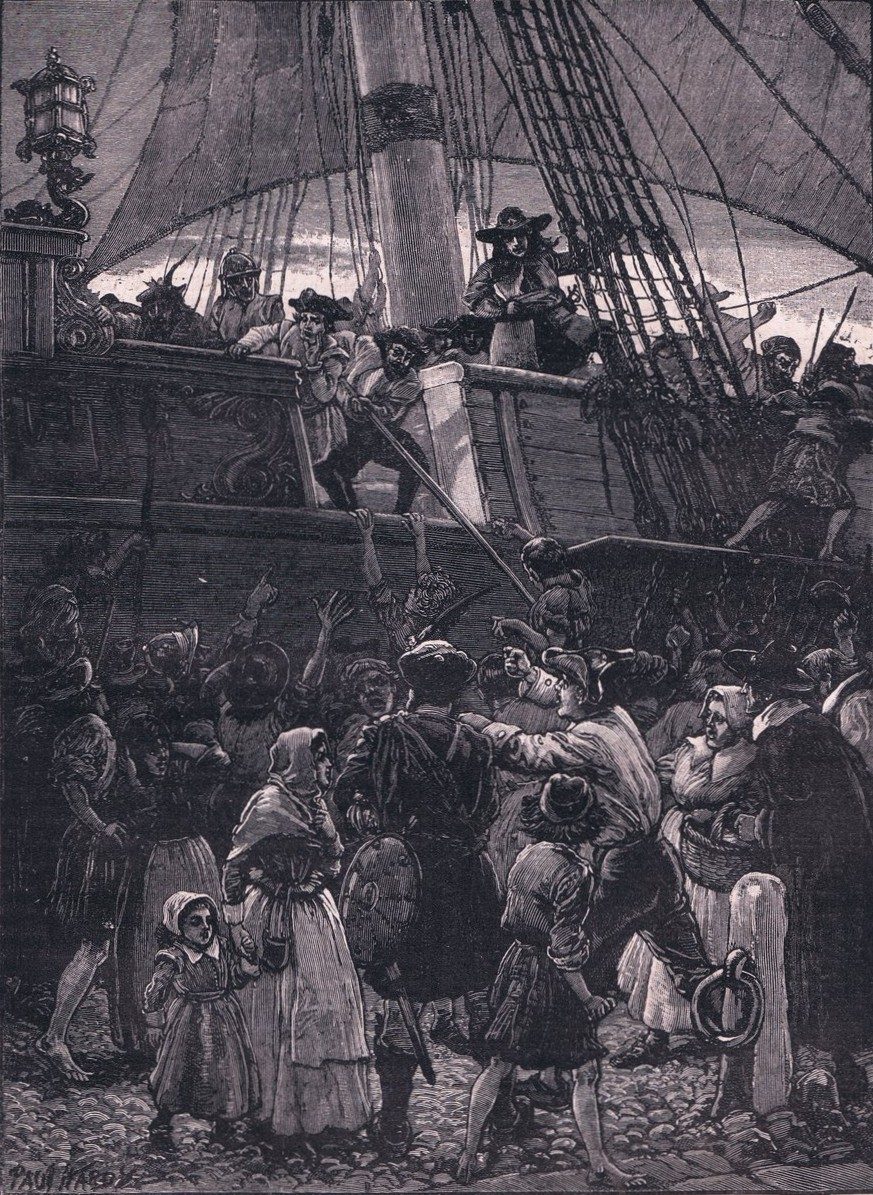
The second Scottish expedition arrived at Darien to find the settlement empty. Its ships had sailed before the news of the first colony’s abandonment reached Scotland. The newcomers had crossed the Atlantic to join a trading venture. Instead, they had to begin it again.
The promise had been enormous: a colony on the isthmus that could draw trade from both oceans. In July 1698, five ships had carried about twelve hundred people from Leith toward that promise. They called the settlement Caledonia. Within a year, hunger, illness, and isolation had forced its abandonment. The second attempt would end under Spanish siege. The failure would outlast the colony, in debts, political arguments, and the lives that did not come home.
A pamphlet with a latitude
The commercial idea was not insane on a map. Panama is narrow. Goods that crossed it would not have to round Cape Horn. William Paterson, the London Scot who had already helped invent the Bank of England, had been carrying a version of this plan for years. What he could not carry was a navy, a treaty with Spain, or the patience of the English merchants who had their own monopoly to protect. The destination was secret even from most of the people who sailed. They opened it at sea.
The English subscription, opened first, was shut by politics. The money that remained was Scottish, which changed the meaning of failure in advance. A London loss can be a bad quarter. A loss concentrated in Edinburgh, Glasgow, and the smaller towns that had bought shares because a neighbor had bought shares is a public event. The company printed propaganda the way Poyais later would, except this company was chartered by a real parliament and the harbor it wanted was on every serious chart. The fraud, if that is the word, was optimism about disease, supply, and the King of Spain. The optimism was sincere enough to put people on ships.
New Edinburgh, for a season
They landed in early November 1698 and renamed the bay Caledonia. The settlement was New Edinburgh. There was a fort, later St. Andrew. There was a council. There were, for a few months, the ordinary arguments of a colony that has more officers than food: who commanded, whose goods could be traded, whether the neighbors were customers or a threat or both. The trade goods they had brought — woolens, stockings, shoes — were not what the coast wanted to buy. Fever did the rest. People who had survived a North Sea crossing had no acquired resistance to an isthmus.
English colonial governors, under instruction from a king who was also King of England and did not want a war with Spain over a Scottish stock certificate, were told not to help. In the summer of 1699 the survivors abandoned the bay. Later tallies say only a few hundred of the twelve hundred were still alive to leave, and that not every ship that fled got home. They did not know, as they left, that a second expedition had already sailed from Scotland. The two fleets missed each other. That miss is the mechanical heart of the story, and it does not need a villain to be fatal.
The second landing
The second fleet — on the order of a thousand more people, in ships that had left before the bad news — found an empty fort and the graves. They refounded the place anyway. Spain, which had never agreed that a Scottish charter was a title to the isthmus, sent troops. There was a fight inland, then a siege of Fort St. Andrew. In March 1700 the second settlement surrendered on terms. The colonists could leave. The port could not. Few of that second company saw Scotland again.
How many died is the number the retelling wants and the archive draws in different circles. Shipboard deaths, isthmus deaths, deaths on the way home: add both expeditions and later writers commonly pass two thousand; count only the first summer on the bay and you can tell a smaller story. We will not average them into a figure a headline can carry. The subscribers did not need a precise corpse count to know the shares were paper.
A refund that was also a country
The Union of 1707 was not a condolence card for Darien. It was a negotiation about succession, trade, religion, and sovereignty that had been failing and restarting for years. What Darien changed was the room. A large number of politically audible Scots were poorer than they had been in 1696, and the treaty offered something that looked, if you held company paper, like a partial rescue: the Equivalent, a sum paid to Scotland that would, among other debts, compensate the company’s investors. People who had lost money on a jungle harbor were being asked to price a parliament.
Some took the price. Some called it a bribe, and were not only being rhetorical. The near-miss is easy to misstate. Scotland did not almost become a great trading empire and then, tragically, forget how. Scotland attempted one colonial gamble at a moment when its king could not sponsor it without picking a fight his English ministers would not fund. The gamble failed in the ordinary colonial ways: fever, distance, a missed rendezvous, a neighbor with more soldiers. The unusual part is what the failure was spent on. It became an argument, in 1706 and 1707, for stopping the attempt to be a separate commercial power at all.
Why the hook is not the essay
On a forum, Darien arrives as a prelude. The colony failed, therefore the Union. That sentence is a slogan wearing a date. The colony failed, and the failure was present in the room when the Union was priced, alongside other facts that would have been in the room anyway.
If you came here from a line about a jungle that bankrupted a country, stay for the less shareable sequence. Five ships. A fort named for a capital. A relief that arrived to find the fort empty. A second landing that already knew. A treaty, seven years on, that paid some of the subscribers back in a different constitution. The isthmus did not decide Scotland. It did make the alternative expensive enough to point at.
A story worth passing on?